
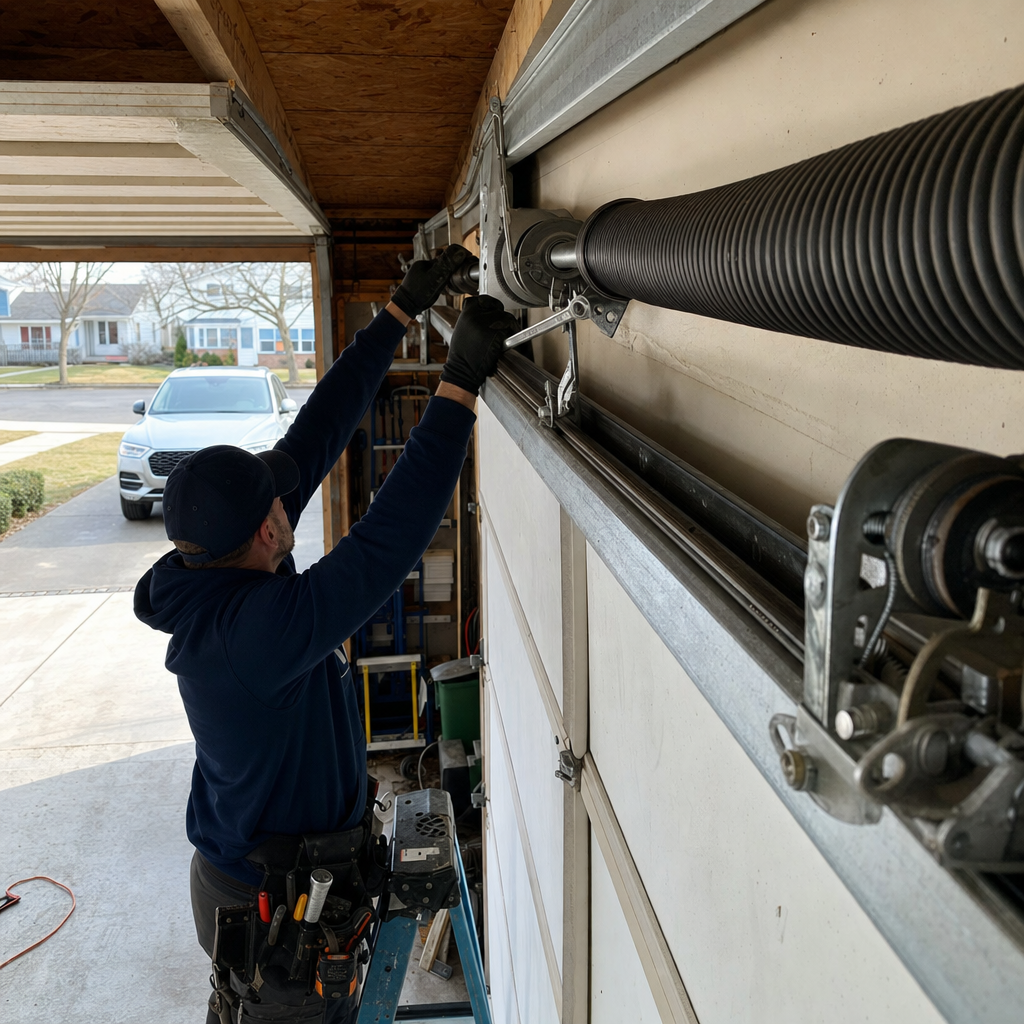
New Garage Door Installation Cost in Connecticut: What You’ll Actually Pay
In Connecticut, Best Garage Door Installation in Connecticut, CT typically runs $700–$2,200 for most residential jobs, with the final number hinging on door type, whether your opening is actually standard width, and what shape the existing frame is in. For an exact quote on your specific garage, call us at (855) 483-0709 — estimates are free, and Daniel Lopez, our owner and lead technician, handles every assessment himself.
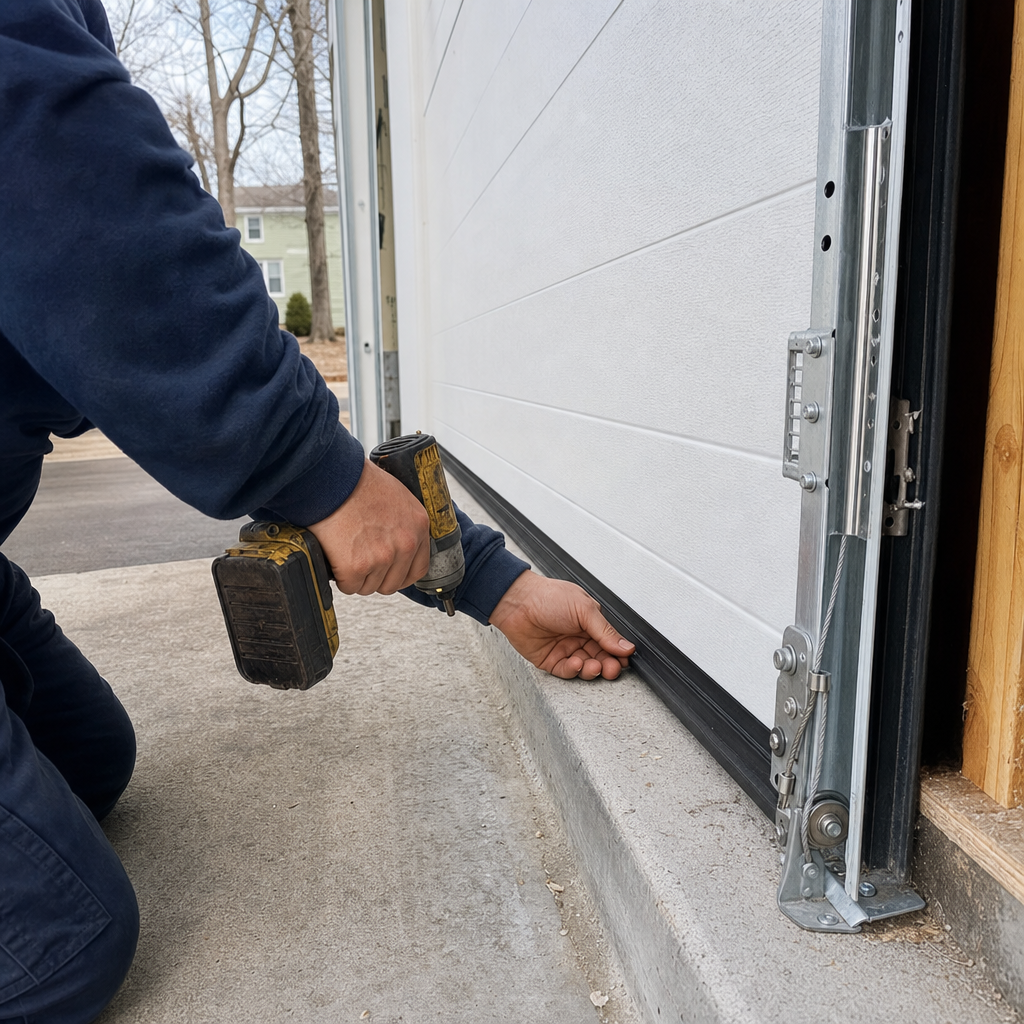
Here’s the thing about that $700–$2,200 range: it assumes a 9×7 or 16×7 opening with a plumb frame and no surprises. In our experience across Connecticut, those assumptions fail about half the time. Last month we were out in a 1960s cape cod near West Hartford where the homeowner had gotten three quotes over the phone, all clustering around $1,100. When we measured on-site, the opening was 15 feet 4 inches — not 16 — which meant a custom-cut door or extensive jamb modification. The real installed cost came in closer to $1,650. The homeowner wasn’t thrilled, but they’d have been angrier if we’d quoted low and showed up with a door that didn’t fit.
We’ve been at this for 17 years, and that scenario plays out constantly across Connecticut’s older housing stock. Daniel Lopez grew up in Hartford’s Frog Hollow neighborhood and learned the mechanical side of this trade through the HVAC and Building Systems program at Howell Cheney Technical High School. He’s spent the better part of two decades running calls from Fairfield County up through the Quiet Corner. When someone calls us after a big-box quote doesn’t add up, it’s usually because the original estimator never set foot in the garage.
Why Connecticut Garage Doors Cost What They Do: Three Hidden Factors
Most homeowners assume brand drives price. It doesn’t — not primarily. Here’s what actually moves the number on your quote in Connecticut:
Non-Standard Openings in Older CT Homes
Connecticut’s housing stock skews older than the national average, especially in towns like West Hartford, New Britain, and the Naugatuck Valley. Garages built before standardized panel manufacturing — roughly pre-1980 — often have openings that aren’t 9 or 16 feet wide. A 15-foot-6-inch opening needs either a custom-cut door (add $200–$500) or carpentry to build out the frame to accept a standard size (add $150–$400). We measure every opening before ordering. It’s why we don’t give firm quotes over the phone.
Frame Condition: The Quote-Killer Nobody Mentions
Here’s what most installation quotes skip entirely: the condition of your jambs and header. If the wood is rotted, out of square, or pulling away from the foundation, you can’t hang a new door that tracks properly. We’ve seen frames in coastal Connecticut — places like Milford and Stratford where salt air accelerates decay — that looked fine until we pried off the old trim. Remedial carpentry adds $150–$400 to the job, and it’s not optional. A door hung on a twisted frame will bind, gap, and fail prematurely. We assess this during our free estimate and itemize it upfront so there’s no surprise.
Insulation R-Value and CT Building Code Reality
For attached garages in conditioned homes, Connecticut’s energy code treats the garage door as part of the thermal boundary. An uninsulated or under-insulated door creates a heat bleed that your furnace pays for. The practical sweet spot for Connecticut winters is R-12 to R-18 — enough to matter, not so much that you’re overbuilding. We see a lot of R-6 doors sold as “insulated” that don’t meet this threshold. If your garage is attached and you heat your home above 50°F in winter, this isn’t just an energy decision; it’s a code-compliance consideration that affects resale inspections in some towns.
Garage Door Type and Cost Breakdown for Connecticut Homes
Below is what we actually install, with honest notes on where each makes sense for Connecticut’s climate and housing types. These are installed prices, including haul-away of your old door, new spring hardware sized to the door’s weight, bottom weather seal, and our standard one-year labor warranty.
| Door Type | Typical Installed Cost | Best For |
|---|---|---|
| Steel sectional (non-insulated) | $700–$1,200 | Detached garages, budget replacement, rental properties |
| Steel sectional (insulated, R-12 to R-18) | $1,000–$1,800 | Attached garages, most CT homes, thermal code compliance |
| Carriage-house overlay (steel or composite) | $1,200–$3,500 | Historic districts, higher-end homes, curb appeal priority |
| Insulated full-view aluminum | $2,000–$5,000+ | Modern construction, contemporary architecture, maximum natural light |
A few notes on these options from our field experience:
- Steel sectional is what 70% of our Connecticut installations are. The key variable is the gauge of steel and the quality of the finish coating. Cheaper doors use 27- or 28-gauge steel that dents if you look at it wrong; we typically spec 24- or 25-gauge for durability. The finish matters too — CT’s freeze-thaw cycling and road salt will destroy a poor powder coat in five years. We install Clopay and Wayne Dalton steel doors specifically because their finish systems hold up against this.
- Carriage-house overlay is popular in towns like Litchfield, Ridgefield, and Guilford where historic commission guidelines or neighborhood character make a plain steel door look wrong. These are heavier doors — often 150–200 lbs more than standard — which means your opener and spring system need to be spec’d accordingly. We’ve replaced too many openers that were underpowered for the door they were trying to move.
- Full-view aluminum is the premium tier. Beautiful door, terrible insulator unless you pay for thermal-break construction and insulated glass. We install these in newer construction where the architect specified them, but we’ll talk you out of one if your garage is attached and you’re expecting any thermal performance.
What’s Actually Included in Our Installed Price
Those low numbers you see on manufacturer websites? They’re door-only, freight-not-included, and they assume you’re installing it yourself. Here’s what our installed price actually covers — and what some competitors mysteriously leave out:
- Haul-away of old door and hardware: A standard two-car steel door weighs 200–300 lbs. Disposal isn’t free, and it isn’t trivial. We include it.
- Spring system sized to new door weight: Your old springs are calibrated for your old door. A heavier or lighter new door needs new torsion or extension springs, properly wound. This is non-negotiable for safe operation.
- New bottom weather seal and end caps: The seal is what keeps water, mice, and road salt out of your garage. We see a lot of “completed” jobs where the old cracked seal was reused.
- Track inspection and alignment: New door, old track? Only if the old track is in spec for the new door’s hardware and hasn’t been damaged. We check this.
- Opener compatibility check: If your opener is staying, we verify it’s rated for the new door’s weight and height. We’ve seen ½-horsepower openers struggling with doors they were never meant to lift.
We’re certified to work on eight major brands — LiftMaster, Chamberlain, Genie, Clopay, Amarr, Wayne Dalton, Craftsman, and Raynor — so we’re not guessing about compatibility. Daniel handles every installation himself, and his standard is straightforward: “If I wouldn’t put it on my own garage, I’m not going to sell it to you.”
When Repair Makes More Sense Than Replacement
Not every call for a “new door” actually needs one. We’ve saved Connecticut homeowners thousands by being honest about what’s fixable:
- Single panel damage: If a car or storm took out one section and the rest of the door is structurally sound, panel replacement runs $250–$500 — a fraction of full replacement.
- Operational issues with a young door: A door installed in the last 8–10 years that’s binding, noisy, or off-track usually needs track realignment ($120–$240), roller replacement ($110–$220), or spring adjustment — not a whole new door.
- Cosmetic fading on an otherwise good door: Some steel doors can be refinished rather than replaced, though the results vary by original coating quality.
We carry parts for the brands you actually own, and we’ll tell you straight if repair is the smarter spend. Our Garage Door Installation page covers the full replacement process in more detail, but the bottom line is: we’ll only sell you a new door if you actually need one.
Connecticut’s Climate and What It Does to Garage Doors
We’ve already mentioned freeze-thaw cycling, but it’s worth being specific. Connecticut sees 40–60 freeze-thaw cycles per winter, depending on whether you’re in the colder northwest hills or the moderated shoreline. Each cycle, moisture seeps into micro-cracks in door finishes, expands, and contracts. Poor-quality steel doors develop edge rust in 3–4 years. Bottom panels on non-thermal-break aluminum doors warp from the differential expansion between warm garage interior and cold exterior.
Daniel’s seen this repeatedly in towns like Torrington and Winsted, where winter lows hit single digits regularly. The Clopay and Wayne Dalton doors we install use thermal-break construction and multi-layer finishes specifically engineered for this stress. It’s not marketing language — it’s whether your door looks decent in year eight or is already sagging and rust-streaked.
Coastal Connecticut adds salt-air corrosion to the mix. We’ve replaced track hardware in Bridgeport and New Haven that was pitted beyond safe operation after five years. For these areas, we spec galvanized or stainless hardware even on standard steel doors — a small upcharge that prevents a bigger problem.
Our Process: What Happens When You Call
When you call (855) 483-0709, Daniel answers or returns calls promptly. Here’s how it works:
- Phone conversation: We discuss what you’re experiencing, what type of door you have now, and what you’re hoping to change. No hard sell — just information.
- On-site assessment: Daniel comes to your home, measures the opening precisely, inspects the frame condition, and checks opener compatibility. This takes 20–30 minutes.
- Written estimate: You get an itemized quote with door options, any necessary carpentry, and hardware specs. No hidden fees.
- Scheduling: Most standard installations happen within 3–5 business days. Emergency situations — a door that’s failed completely or is unsafe — we handle same-day or next-day.
We’re owner-operated, not a franchise dispatch center. The person who quotes your job is the person who installs it. That’s been our model for 17 years, and it’s why 526 Connecticut homeowners have left reviews averaging 4.8 stars. They know who they’re getting.
FAQs
Most homeowners in Connecticut pay between $700 and $2,200 for a professionally installed residential garage door — see How Much Does Garage Door Installation Cost? (2026 Price Guide) — Connecticut, CT for full details, with carriage-house styles running $1,200–$3,500 and premium full-view aluminum starting around $2,000. The final cost depends on door type, whether your opening is standard width, and whether the existing frame needs carpentry work. Call (855) 483-0709 for a free, exact quote — we measure on-site so there are no surprises.
Repair is almost always cheaper if the door is under 10 years old and the damage is limited to one panel, the opener, or the spring/cable system. Panel replacement runs $250–$500, spring repair is $180–$340, and opener repair is $120–$320 — all well below replacement cost. We assess this honestly during our free estimate and will tell you if repair is the smarter spend. Call (855) 483-0709 to schedule an assessment.
Emergency Garage Door Installation in Connecticut, CT is available for same-day situations — a door that’s failed completely, off-track and unsafe, or stuck open compromising security — but standard replacements typically schedule within 3–5 business days because we custom-order doors to your exact opening measurements. We stock common repair parts for LiftMaster, Genie, and other major brands for same-day fixes. For urgent needs, call (855) 483-0709 and we’ll prioritize you.
Online prices are almost always door-only, freight-extra, DIY-installation figures that don’t include haul-away of your old door, new springs calibrated to the door’s weight, bottom weather seal, track alignment, or professional labor. Our $700–$2,200 installed price includes all of these, plus our one-year labor warranty. We’ve been called in after homeowners bought a “$399 door” online and discovered the real cost was triple that once installation reality set in. We itemize everything upfront so you know the actual number before work starts.
Ready for an Honest Quote on Your New Garage Door?
We’ve installed and replaced garage doors across every corner of Connecticut, from the shoreline towns to the Quiet Corner, and we know the local housing stock well enough to spot the surprises before they become your problem. Daniel Lopez handles every estimate and installation personally — no subcontractors, no bait-and-switch. For a free, no-pressure assessment and exact quote on your new garage door installation, call (855) 483-0709 today.
Written by Daniel Lopez, Owner & Lead Technician at Guardian Garage Door Repair Connecticut, serving Connecticut, CT.