
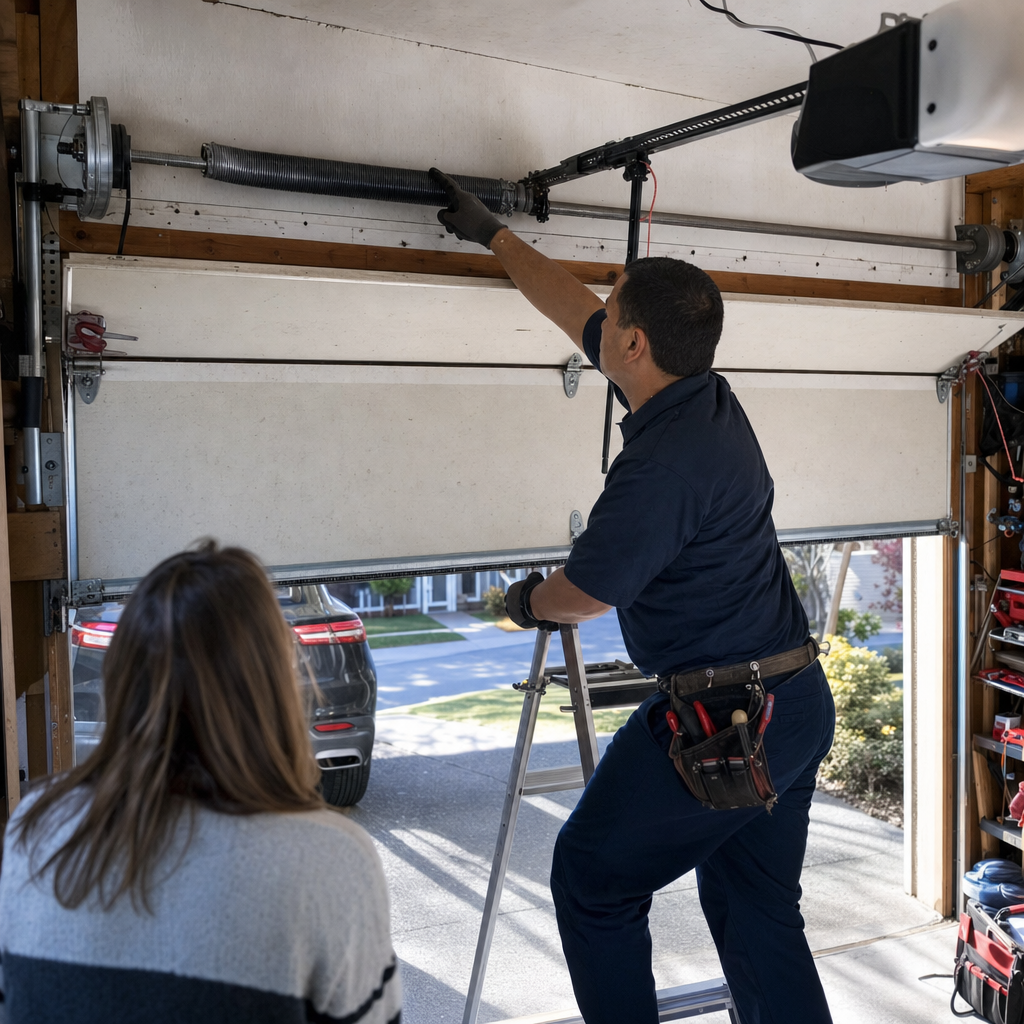
Why Does My Garage Door Reverse in Connecticut? The Two Safety Systems Explained
A garage door that reverses before touching the ground almost always signals a photoelectric sensor issue—misalignment, dirty lenses, or direct sunlight hitting the eye. A door that reverses after hitting the floor points to a force-limit or travel-limit setting that needs recalibration. These are two completely different problems with two completely different fixes, and knowing which is which saves you both money and a service call. If you’re stuck now, we answer our phone at Guardian Garage Door Repair Connecticut — (855) 483-0709 — and we’ll walk you through the 90-second diagnostic over the line.
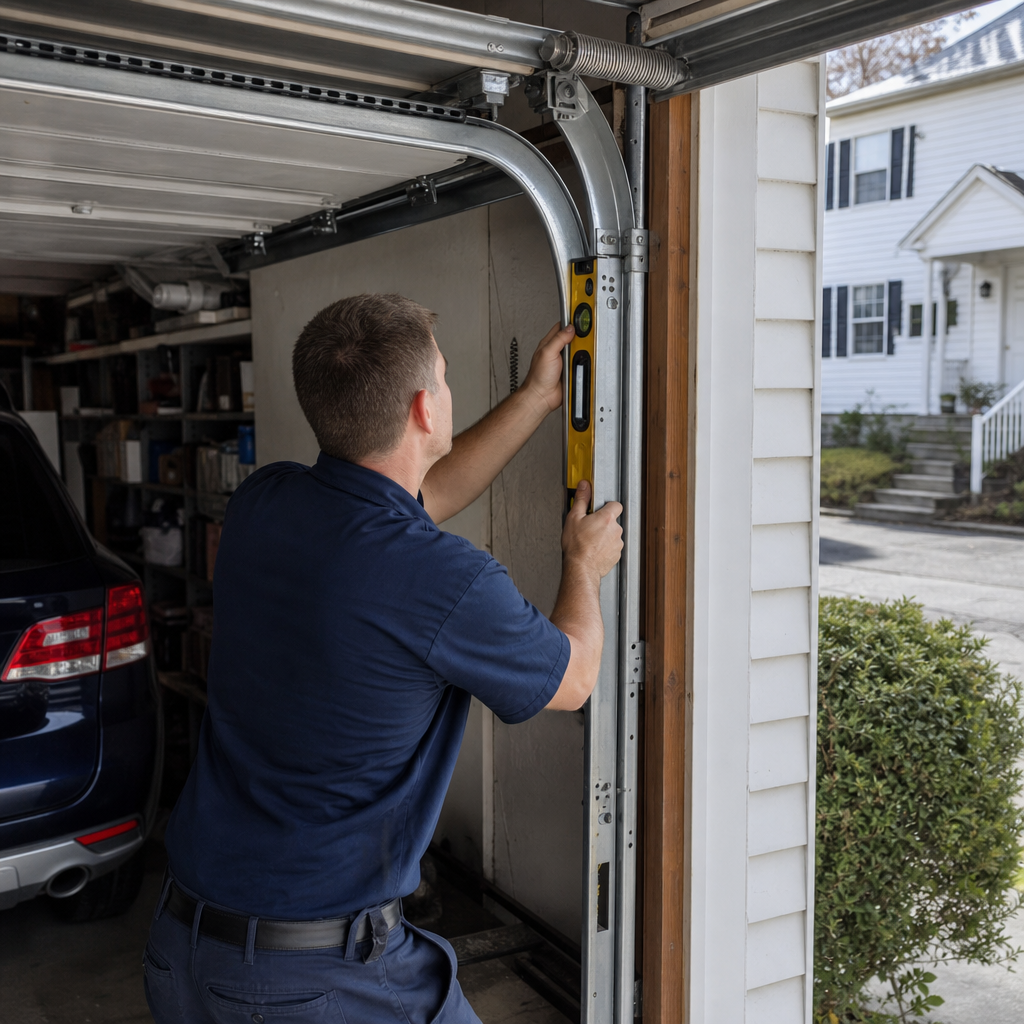
Last October, a homeowner in West Hartford called us convinced her 2019 LiftMaster was failing. The door would rise fine, then reverse two feet from the floor — but only between 7:15 and 8:30 AM. By the time she got home from work, it operated perfectly. She’d already paid another company $180 for a “sensor replacement” that changed nothing. We showed up, aimed a piece of cardboard at the east-facing sensor eye, and the problem vanished. Morning sun angle through her garage’s front windows was blinding the receiver. No parts needed. No charge for the call.
That story illustrates something most Connecticut homeowners don’t realize: your garage door reversing isn’t broken — it’s working. The question is whether it’s responding to a real obstruction, a misaligned sensor, or a force-limit setting that drifted after a cold snap. Each one has a different fix, and almost no homeowner knows how to tell the difference. After 17 years running service calls from Fairfield County up through the Quiet Corner, we’ve learned that the “broken” door is usually a $0 adjustment disguised as a $300 mystery.
Reversal Before Touching the Floor: The Photoelectric Sensor System
Every garage door opener manufactured after 1993 has two small photo eyes mounted 4–6 inches off the floor, one on each side of the door track. They shoot an invisible beam across the opening. Break that beam — with a kid, a bike, a leaf, or a sun glare — and the door reverses. That’s federal law, not a feature, and it’s non-negotiable.
When your door reverses before hitting the floor, the sensor system is the only culprit. The motor never even attempts full closure; it gets the abort signal early. Here’s what actually goes wrong in Connecticut homes:
- Misalignment from vibration: Normal door operation shakes the brackets. A 1/8-inch shift is enough to break the beam.
- Dirty lenses: Road salt, pollen, and garage dust coat the eyes. We see this constantly after Connecticut’s March mud season.
- Sun interference: East-facing garages get direct morning sun in fall and spring that overwhelms the infrared receiver. The door works fine by 9 AM, “breaks” at dawn, and confuses everyone.
- Wiring damage: Mice, moisture, or a stray shovel nick the low-voltage line running to the sensor.
- Obvious obstruction: A basketball, shovel, or the corner of your trash bin you didn’t notice.
The Connecticut-specific angle most competitors miss: our housing stock. Older colonials in Hartford’s West End, post-war capes in Wethersfield, and the 1970s split-levels dotting Manchester all have garages with east or southeast-facing openings. In September and March, when the sun sits lower, that morning light streams straight across the threshold and hits the receiver eye dead-on. The door reverses. The homeowner thinks it’s random. It’s not — it’s astronomy.
Daniel Lopez, our owner and lead technician, grew up in Frog Hollow and trained in motors and mechanical systems at Howell Cheney Technical High School before spending 17 years diagnosing these exact patterns. He’s seen sun interference so predictable that he tells callers to test their door at 10 AM before booking a truck roll. Half the time, it saves them the trip.
Reversal After Touching the Floor: The Force-Limit System
If your door touches the ground — or nearly does — then bounces back up, the photoelectric sensors aren’t the issue. The door completed its travel, hit the floor, and the opener’s internal force sensor decided something was wrong. This is a completely different diagnostic path.
Inside every opener, a circuit board monitors motor load. If the door meets more resistance than expected, the opener assumes it hit an obstruction — a car bumper, a box, a pet — and reverses to avoid crushing it. The problem: “expected” resistance changes with temperature, hardware condition, and wear.
Connecticut’s winter reality makes this especially relevant. When temperatures drop below 20°F, metal hardware contracts. Rollers stiffen in cold grease. Hinges bind slightly. The door needs marginally more force to close. The opener’s factory force setting — calibrated in a warm warehouse — now reads that extra drag as an obstruction. The door hits the floor, the motor strains a fraction longer than the limit allows, and the door reverses hard.
We’ve run emergency calls in Glastonbury at 11 PM on a January night where the homeowner was trapped outside because the door kept bouncing back up. The fix? A two-minute down-force adjustment with a flathead screwdriver. The opener thought it was saving a life. It was actually just confused by physics.
How to Tell Which System Is Failing: The 90-Second Diagnostic
Here’s the sequence we walk callers through. No tools needed beyond cardboard and maybe a screwdriver.
Step one — isolate the sensors. Stand inside your garage, door open. Find the two sensor eyes (small boxes with LED lights, usually one amber, one green). Cut a piece of cardboard about the size of a paperback book. Hold it directly in front of one sensor, blocking the beam entirely. Now press your remote to close the door.
If the door closes normally with the sensor blocked, your sensors are the problem. (Blocking one sensor should actually prevent closing — if the door closes anyway, the sensors are already non-functional, which is its own safety issue.)
If the door still reverses with sensors blocked, the sensors aren’t in the loop. Move to step two.
Step two — check for obvious sensor issues. Clear the cardboard. Are both sensor LEDs lit steady? If one is blinking or dark, they’re misaligned. Loosen the wing nut, adjust until both LEDs glow solid, then retighten. Wipe both lenses with a clean cloth. Try the door again.
If the door now closes, you’re done. If not, and it’s reversing before touching floor, check for sun interference — does the problem happen at specific times of day? Temporarily shade the receiver eye (the one with the green LED, usually) with your hand or cardboard and test.
Step three — test the force limit. If the door reaches the floor or nearly does, then reverses, find your opener’s force adjustment screws. On most LiftMaster, Chamberlain, and Genie units, these are on the back or side panel, marked “up force” and “down force” or with arrow symbols. Using a flathead screwdriver, turn the down-force screw one quarter-turn clockwise — that’s it. Test the door. If it still reverses, another quarter-turn. Never more than a full turn from your starting position.
Critical safety note: These adjustments change how much force your opener will apply before reversing. Too high, and the door won’t reverse on a real obstruction — a child, a pet, your foot. If you’re not comfortable with this tradeoff, stop and call us. This is also why we don’t recommend DIY adjustment on older openers with worn mechanical safety systems. When in doubt, the professional assessment is worth it.
When Reversal Means Real Damage: The Spring and Cable Scenarios
Sometimes the safety systems are working perfectly — and detecting a genuine mechanical problem. If your door reverses consistently regardless of sensor and limit adjustments, or reverses with a visible shudder or lopsided movement, the opener is correctly reading abnormal load.
The most common culprit: a broken or fatigued torsion spring. Connecticut’s temperature swings accelerate metal fatigue. A spring that’s near failure creates uneven tension across the door. One side lifts faster. The door binds in the tracks. The opener’s force sensor flags the strain and reverses. This is the scenario where DIY adjustment is dangerous — you’re overriding a safety system that’s trying to tell you something.
Other mechanical causes we see:
- Frayed cable: One side loses lift assistance, creating the same uneven load.
- Bent track: Usually from a car bumper or ice expansion, forcing rollers to climb the rail edge.
- Worn rollers: Steel rollers in 1980s and 1990s Connecticut builds seize in their housings after decades of salt and humidity.
Spring and cable work involves stored tension that can cause serious injury. We don’t walk homeowners through spring replacement over the phone. The garage door repair we provide includes full tension release, hardware inspection, and balanced re-tensioning — Daniel handles it himself, no dispatched strangers.
What Fixes Cost in Connecticut
Here’s the honest breakdown based on 17 years of pricing across the state. These are real ranges, not teaser rates that balloon on arrival:
| Service | Typical Range |
|---|---|
| Sensor realignment / cleaning (no parts) | $0–$120 service call |
| Sensor replacement (pair) | $150–$280 |
| Opener force/limit adjustment | $0–$120 service call |
| Spring repair (torsion, single) | $180–$340 |
| Cable repair | $130–$250 |
| Opener repair (circuit board, gear kit) | $120–$320 |
| General garage door repair | $150–$600 |
The $0 entries? That’s when we solve it over the phone or in two minutes on arrival. We don’t charge for proving your sensors need wiping. “If I wouldn’t put it on my own garage, I’m not going to sell it to you.” That’s been our standard since Daniel started this business, and it’s why 526 homeowners have left reviews averaging 4.8 stars — not because every job was free, but because every job was honest.
Connecticut’s Climate: Why This Happens Here More Than You’d Think
Our state’s particular misery — freeze-thaw cycles, coastal humidity, and aging housing stock — creates reversal problems you won’t find in Arizona or Oregon. The 20°F threshold for force-limit drift? That happens 40+ nights per year in Hartford, 20+ even along the shore. The salt air corrodes sensor brackets faster inland competitors expect. And the 1950s–1980s construction boom means thousands of garages with original openers still running on 1993-era safety logic, long before current diagnostic sophistication.
We’ve replaced sensors in New Haven that were “broken” because a nor’easter had driven spray through a gap in the jamb. We’ve recalibrated openers in Torrington after a -10°F night turned lithium grease to paste. These aren’t generic garage door problems. They’re Connecticut garage door problems, and they need someone who knows the difference.
FAQs
The photoelectric safety sensors are detecting a broken beam — from misalignment, dirt, sun glare, or an actual obstruction. Check that both sensor LEDs glow steady; if one blinks, realign until solid. Wipe the lenses. If the problem only happens in morning light on east-facing garages, sun interference is likely. Call (855) 483-0709 for a free estimate if adjustment doesn’t solve it.
The opener’s force-limit setting is too sensitive for current operating conditions — often because cold weather increased mechanical resistance, or the travel-limit screw drifted over years of vibration. Try a quarter-turn clockwise on the down-force adjustment screw. If the door still reverses, or if the opener is more than 15 years old, have a technician assess whether the safety system itself is worn. Call (855) 483-0709 for an exact quote — estimates are free.
Repair is usually cheaper if the unit is under 12 years old and the issue is sensor or force-limit related — typically $120–$320. Replacement becomes cost-effective when the opener lacks modern safety features, has a worn mechanical reversing system, or needs major internal parts. We stock repair components for LiftMaster, Chamberlain, Genie, and other major brands, so we can often fix what franchise operations want to replace. Call (855) 483-0709 for an honest assessment.
Yes — we offer Emergency Garage Door Repair in Connecticut, CT for reversal issues that trap vehicles or compromise security. Same-day availability depends on call volume and your location, but we prioritize doors that won’t close or open at all. Daniel Lopez, our owner and lead technician, handles emergency calls personally. Call (855) 483-0709 and we’ll give you a realistic arrival window.
When to Call Guardian Garage Door Repair Connecticut
If you’ve run the 90-second diagnostic and the door still reverses, or if you’re not comfortable adjusting force limits that affect safety systems, we’re here. Daniel Lopez has spent 17 years doing exactly this — from honest spring assessments that don’t upsell unnecessary parts to emergency calls at 9 PM when you’re locked out. We service all major brands including LiftMaster, Chamberlain, Genie, Clopay, Amarr, Wayne Dalton, Craftsman, and Raynor, and we stock parts for the brands you actually own.
If you’d rather have it looked at, Guardian Garage Door Repair Connecticut offers Best Garage Door Repair in Connecticut, CT with a no-pressure assessment — call (855) 483-0709.
Written by Daniel Lopez, Owner & Lead Technician at Guardian Garage Door Repair Connecticut, serving Connecticut, CT.